Part 5.4 — Mocking Fetch, API Clients & Error States
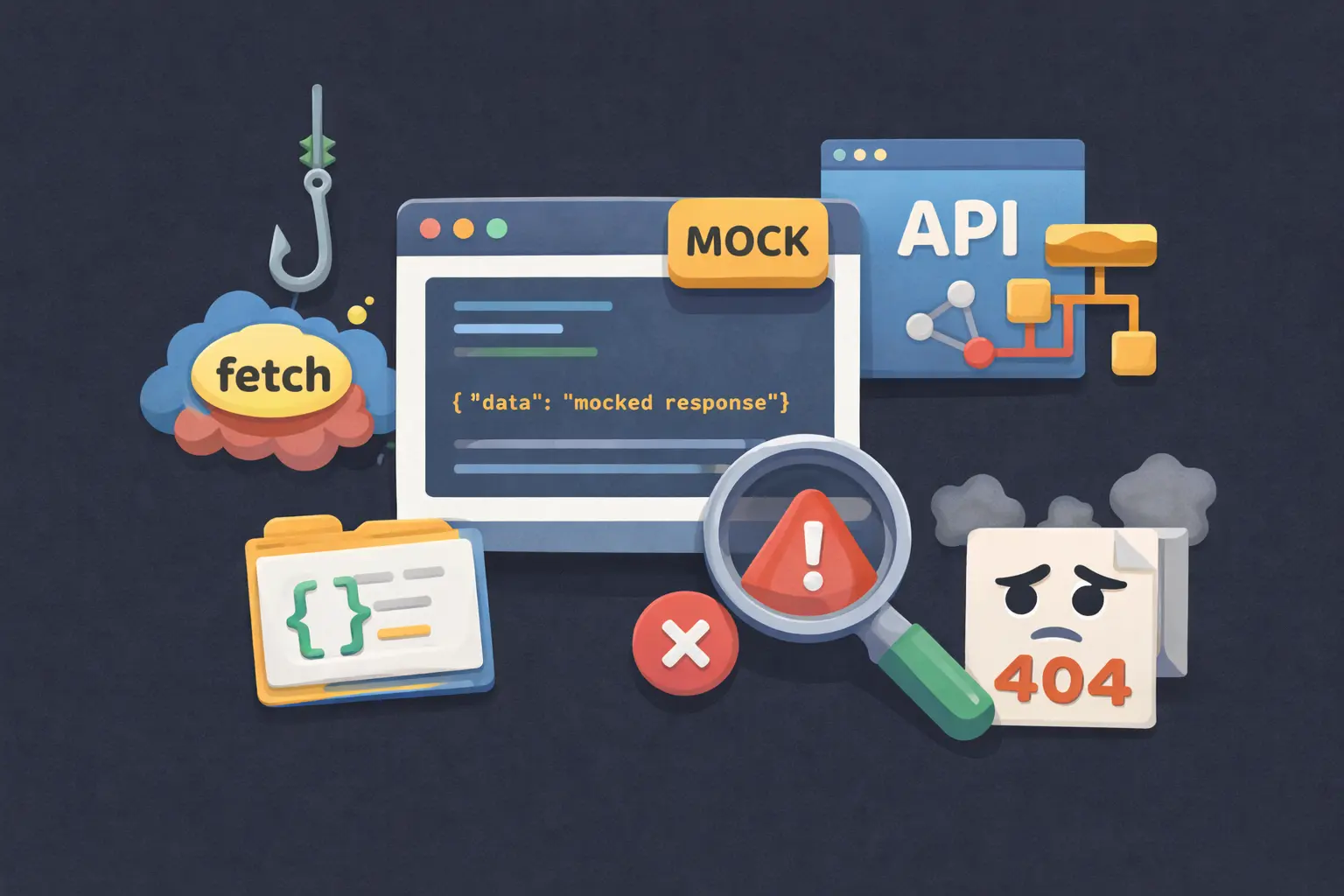
Frontend tests should be fast, deterministic, and independent of the backend. This post shows how to mock REST APIs correctly—without leaking implementation details.

UI/UX, HTML, CSS, and modern frameworks to build beautiful and accessible websites.
Frontend tests should be fast, deterministic, and independent of the backend. This post shows how to mock REST APIs correctly—without leaking implementation details.

Components and hooks are where frontend behavior lives. This post shows how to test them through real user interactions—without brittle implementation details.
A good testing philosophy is useless without a solid setup. This post walks you through configuring Jest and React Testing Library so your tests are fast, reliable, and easy to write.
Testing React apps isn’t about coverage numbers—it’s about confidence. This post gives you a practical philosophy for deciding what’s worth testing and what isn’t.
Interactivity defines the web. In this post, you’ll master event handling, form state, and validation in React using TypeScript — building reliable, predictable UI experiences.
Before JSX and styled-components, there’s structure and style. Understanding HTML5 and CSS3 fundamentals ensures your React interfaces are fast, accessible, and production-ready.
Learn how to convert Figma designs into pixel-perfect, production-ready code. Explore workflows for collaboration, design handoff, and maintaining consistency between designers and developers.
Learn how to design and develop accessible, inclusive interfaces following WCAG and ARIA standards. Make your frontend design usable by everyone.
Learn how to build scalable design systems and UI component libraries using TailwindCSS, CSS variables, and CSS-in-JS. Create reusable, consistent, and maintainable frontend foundations.
Learn advanced CSS and frontend optimization techniques to enhance performance, improve rendering speed, and ensure smooth, fast user experiences.
Learn how to use CSS animations, transitions, and microinteractions to create interactive, engaging, and intuitive frontend experiences that captivate users.
Learn how to design and code reusable UI components like buttons, cards, and forms using scalable CSS architecture, design tokens, and responsive styling patterns.
Results